

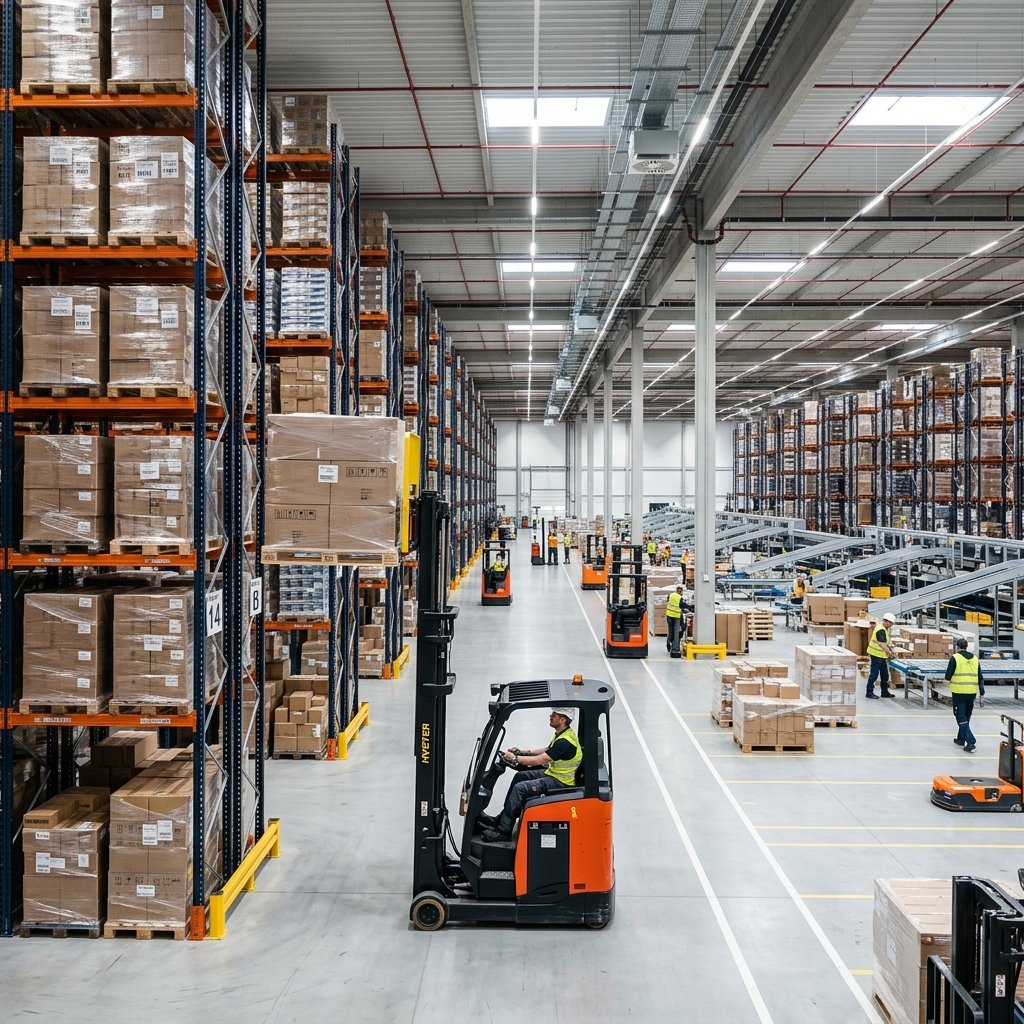
Every business moves goods differently, but most logistics providers sell the same fixed packages to everyone. That mismatch is where a lot of B2B logistics relationships quietly start to fail.
What B2B Logistics Actually Covers
B2B logistics is the coordination of goods movement between businesses — not the final delivery to an individual consumer, but the ongoing flow of inventory, materials, or products between companies. It spans everything from scheduling and routing to documentation and communication, and it’s rarely a single, isolated transaction. It’s an operational relationship.
Why Most B2B Logistics Relationships Break Down as Businesses Grow
Fixed-Tier Service That Doesn’t Flex A logistics setup that worked well at a smaller volume often starts to strain as a business scales — not because the provider did anything wrong, but because the service was never designed to flex in the first place.
Too Many Vendors, Not Enough Coordination Businesses often end up managing separate providers for different legs of their supply chain, each with its own point of contact, its own reporting, and its own blind spots. The coordination burden quietly becomes the business owner’s job.
Being Treated Like an Account Number As a business grows past a certain size, it’s common to feel like a smaller priority to a larger provider rather than a bigger one. That dynamic works against exactly the businesses that need the most attention as they scale.
What Flexible B2B Logistics Should Actually Look Like

- Solutions built around your actual operating patterns, not a standard tier
- A single point of contact instead of a patchwork of vendors
- Service that scales with your order volume and complexity, not just your invoice
- A partner who proactively flags issues, rather than waiting for you to notice them first
Questions to Ask Before Choosing a B2B Logistics Partner
- Will this relationship still work the way I need it to at twice my current volume?
- Am I one of many identical accounts, or a business they actually understand?
- What happens when something changes — a new product line, a new region, a schedule shift?
How Optibiz Approaches B2B Logistics
Optibiz builds B2B logistics support around how a business actually operates, not a standard package. The goal is a single point of contact and a solution that scales as your operations do — reducing friction instead of adding to it as you grow.
Conclusion
B2B logistics works best when it’s treated as a relationship, not a recurring transaction. The businesses that get this right spend less time managing their logistics provider and more time running their business.
Ready to Optimize Your Operations?
If your current logistics setup is starting to feel like it’s straining under growth, request a quote and tell us where the friction is — we’ll build a plan around your actual operations.